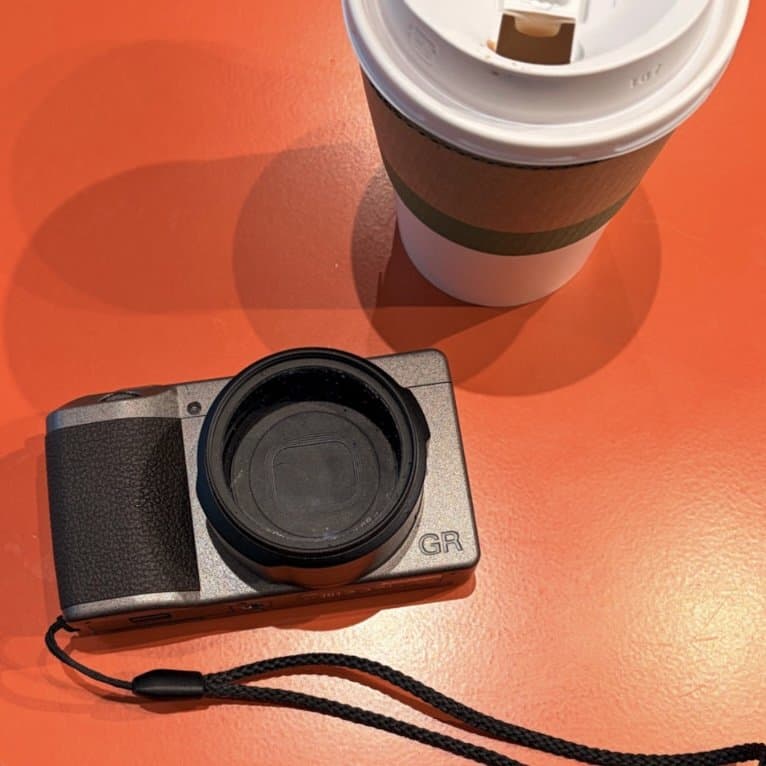
I work with Ricoh. This camera was not a gift from the brand: it was a birthday present. The opinions are my own.
On 6 August 2024, for my birthday, my boyfriend gave me his Ricoh GR III. I had not owned a camera for years. It is the camera that brought me back to photography.
Mine is the Diary Edition, and it lives up to its name: it is my own way of journaling.
Good to know: the GR III is no longer produced
Ricoh ended production of the GR III in 2025, because of difficulties sourcing parts, and replaced it with the GR IV. You can still find the GR III second hand, but if you want a new camera today, the Ricoh GR IV is its successor. On Amazon Belgium, it is sold in the GR IV HDF version, with a built-in diffusion filter.
Be careful with batteries: the GR IV does not use the same one. It takes the Ricoh DB-120 battery, not the DB-110 of the GR III.
What I used before
Nothing. I had not had a camera for years.
How I use it
For everything. It is my way of journaling.
Ricoh GR III: the key specs
Sensor and lens. A 24MP APS-C sensor, with a fixed 28mm equivalent lens at f/2.8.
Stabilisation and focus. 3-axis image stabilisation, and phase detection autofocus.
Screen. A 3-inch touchscreen.
Size. It fits in a pocket.
What makes the Diary Edition different
It is the same camera as the standard GR III, with three differences:
- The finish. A metallic warm grey body with a textured surface, a dark brown grip, and a natural silver ring around the lens.
- The Negative Film image control. A mode that recreates the look of prints made from colour negative film, with rich colours and a slightly faded tone.
- The shutdown screen. When you turn it off, the camera shows how many photos you took that day.
The Negative Film mode and the shutdown screen were later added to the standard GR III and GR IIIx through a firmware update.
What I love about the GR III
1. Its size
It is tiny, it fits in a pocket.
2. Its speed
It is fast.
3. The recipes
I love shooting with recipes: custom image settings that give a look straight out of the camera. I keep mine to myself, but I can tell you that I use the Negative Film image control.
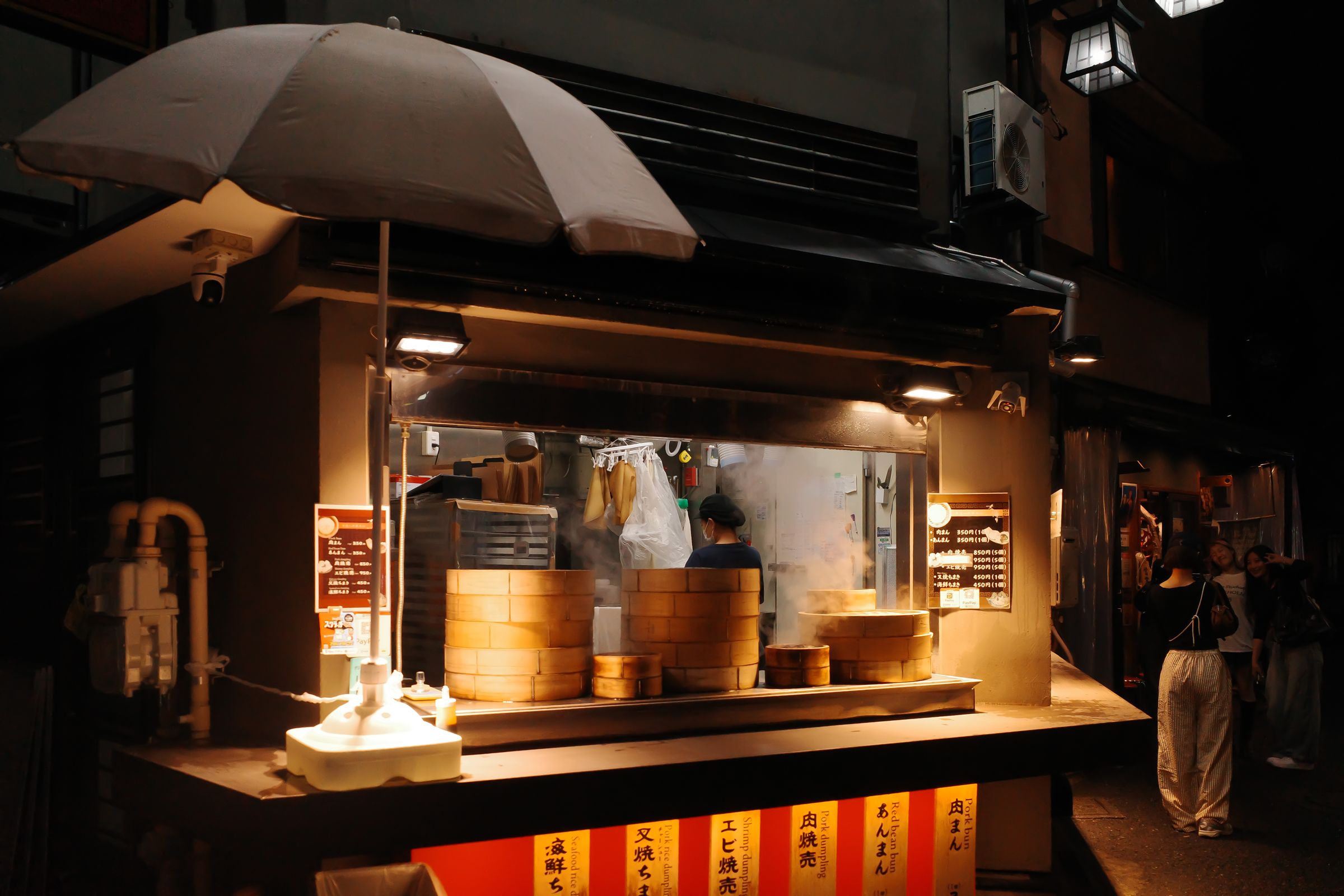
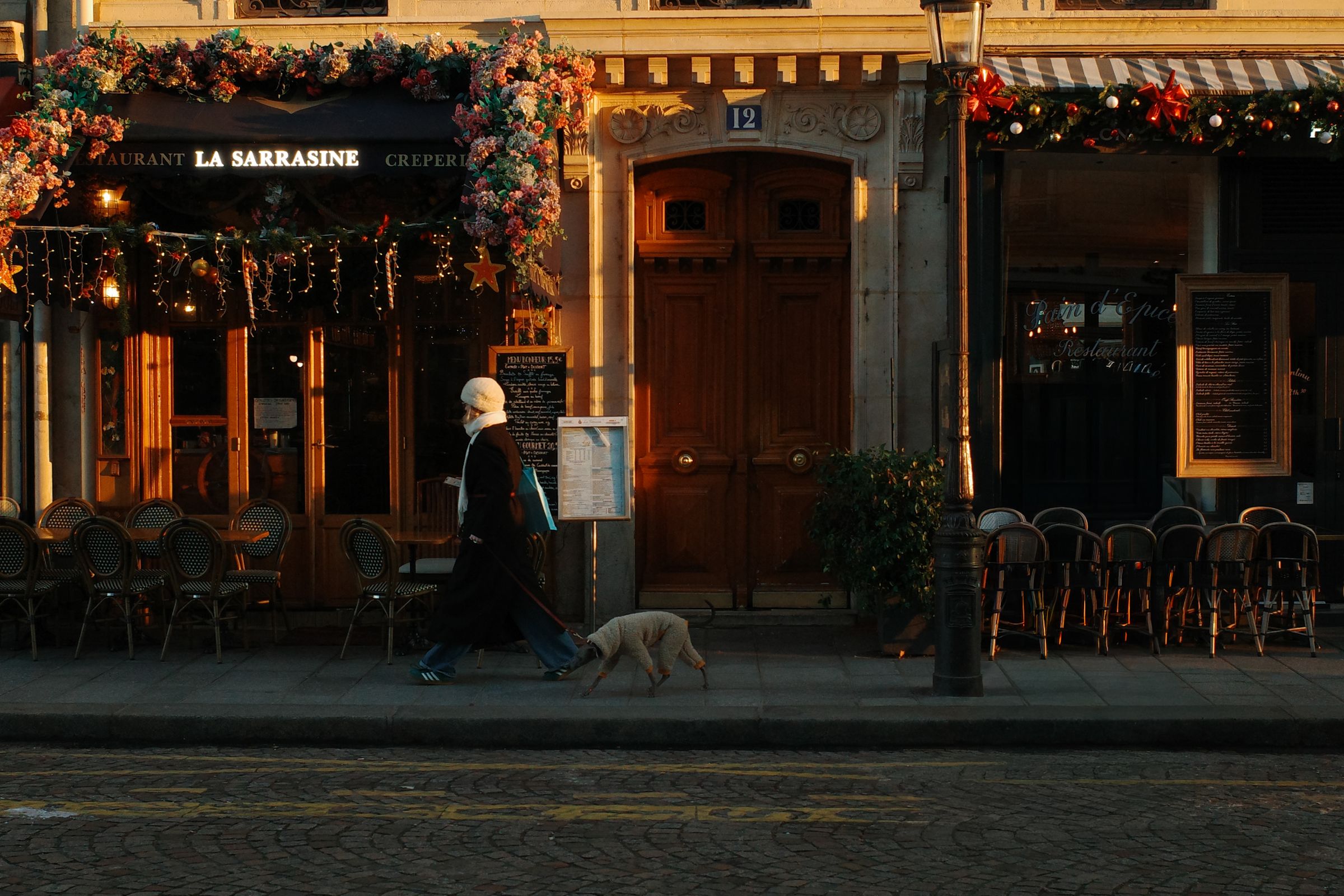
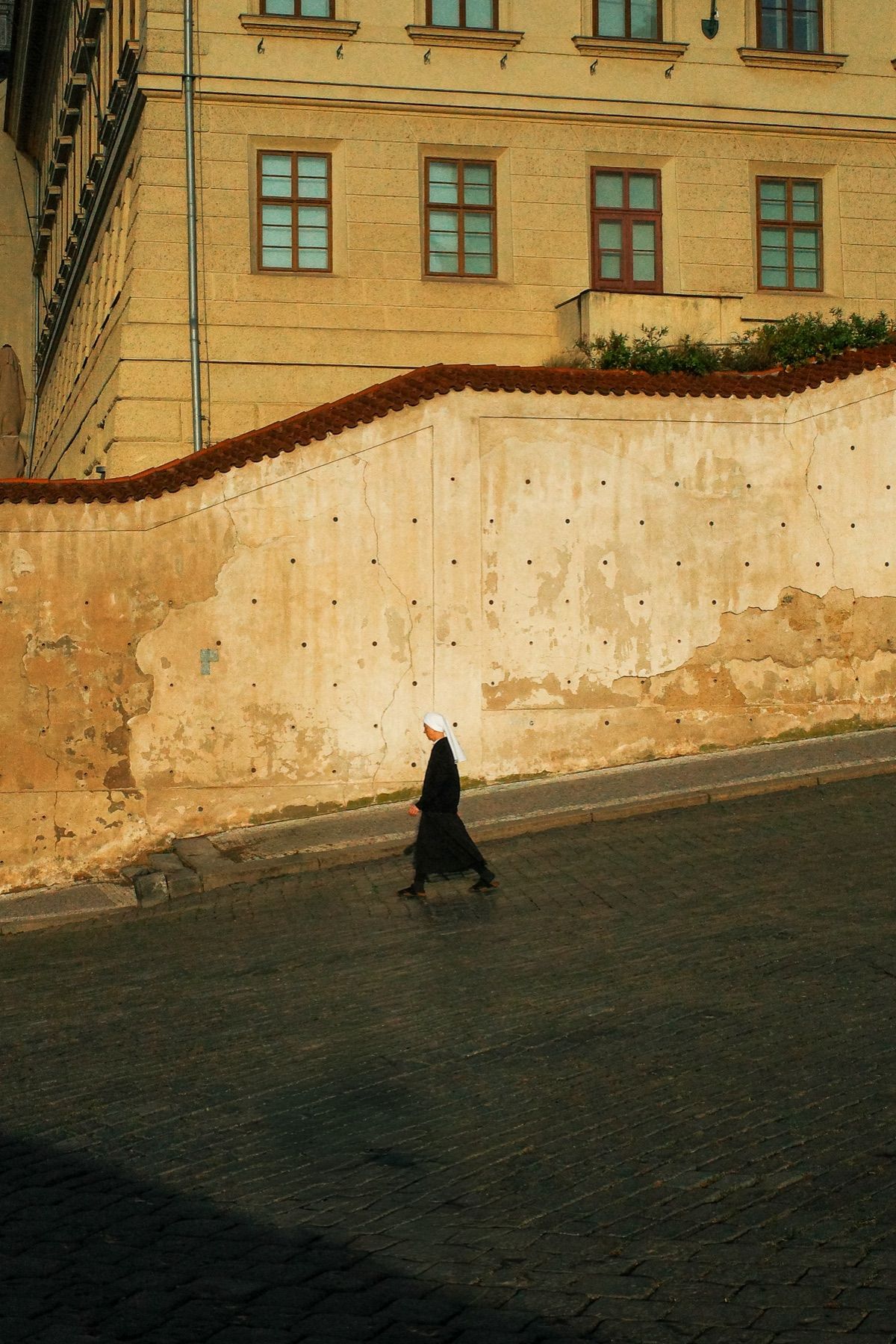
Shot on the Ricoh GR III
A few of my photographs taken with it, in Tokyo, Paris and Prague.
The downside
A loose contact in the battery compartment. Apparently it is a known issue on the Ricoh GR, but for me it has never been a real handicap.
My favourite setting
Snap Focus at 1.5m, for street photography. You set a fixed focus distance in advance, and when you press the shutter button all the way down in one go, the camera takes the picture at that distance straight away, without waiting for the autofocus. I keep mine at 1.5 metres.
Negative Film, for the look. It is the image control I use.
Who should buy the Ricoh GR III?
- Shy people who want to start street photography.
- Not for viewfinder lovers. There is no built-in viewfinder, you frame on the screen.
Accessories I use
- A neck strap.
- The Ricoh GW-4 wide conversion lens, which takes the lens to a 21mm equivalent.
- The Ricoh tele conversion lens.
- The Ricoh adapter ring, which I use for everything: the conversion lenses, and filters.
- A JJC ND filter, mounted with the adapter ring.
- The Ricoh GF-2 flash.
- Five Ricoh DB-110 batteries, the battery of the GR III, with a JJC charger. Useful if you buy a GR III second hand. If you buy the GR IV, you need the DB-120 battery instead.
Final thoughts
Small, fast, and with its recipes, the GR III Diary Edition lives up to its name: it is my diary.
Shot on the GR III
Most of the street photographs in these guides were taken with it:
Affiliate disclosure: some links in this article are affiliate links. If you buy or book through them, I earn a small commission at no extra cost to you. More